From Fermat's Last Theorem Onwards (VIII): Eisenstein Integers
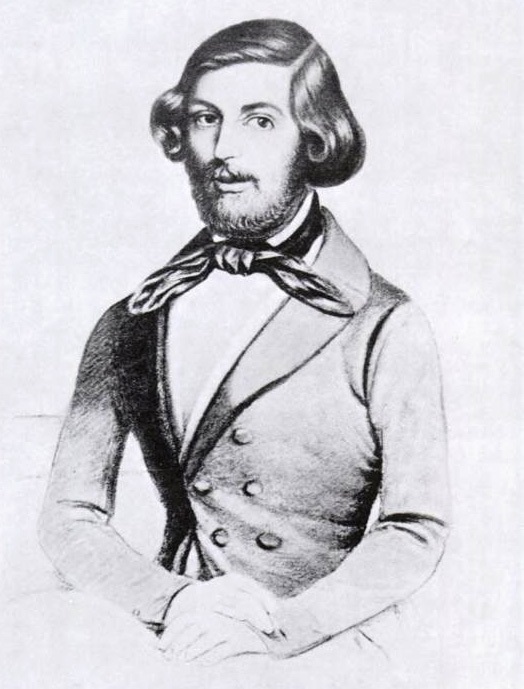 Gotthold_Eisenstein
It's time to march on to the case n=3. To prove this case, we need a new number ring: the Eisenstein integers. Eisenstein was a famous German mathematician, and his contemporary Gauss once remarked: "There have been only three epoch-making mathematicians: Archimedes, Newton, and Eisenstein." This alone shows just how remarkable Eisenstein's achievements were. Indeed, reading through the history of Fermat's Last Theorem is at the same time like reading a who's-who of mathematics — without truly world-class mathematical ability, it is almost impossible to make any real contribution to the theorem.
Basic definitions
Like the Gaussian integers, the Eisenstein integers are also a type of complex integer. The Gaussian integers are built on the basis 1 and $i$, where $i$ is in fact a fourth root of unity, i.e., a non-real root of $x^4-1=0$ — which is why the Gaussian integers are also called the quartic cyclotomic integers. The Eisenstein integers, by contrast, are built on the basis 1 and $\omega$, where $\omega$ is a cube root of unity, i.e., a non-real root of $x^3-1=0$. Any Eisenstein integer can be written as $a+b\omega,\,a,b\in\mathbb{Z}$, and the ring of Eisenstein integers is denoted $\mathbb{Z}[\omega]$, also called the ring of cubic cyclotomic integers. more
Readers might be tempted to use the imaginary unit $i$ to write out the explicit form of $\omega$, and might even fret over which root of unity to choose (there are two distinct complex cube roots of unity). But this is unnecessary, because here we're only concerned with numbers of the form $a+b\omega$, so we don't actually need $i$ to exist at all — we only need to remember $\omega^2+\omega+1=0$, and that's enough to establish the arithmetic in $\mathbb{Z}[\omega]$. For example,
$$\begin{aligned}(a+b\omega)(c+d\omega)&=ac+(bc+ad)\omega+bd\omega^2\\ &=ac+(bc+ad)\omega+bd(-\omega-1)\\ &=(ac-bd)+(bc+ad-bd)\omega \end{aligned}$$
In particular, we call $a+b\omega^2$ the conjugate of $a+b\omega$. Based on this definition, the conjugate of $a+b\omega^2$ is $a+b\omega$ (why? Try proving this purely within $\mathbb{Z}[\omega]$, without resorting to the imaginary unit $i$). Next comes the definition of the norm:
$$N(a+b\omega)=(a+b\omega)(a+b\omega^2)=a^2-ab+b^2$$
Why define it this way? First, the norm must be a real number; second, the norm must satisfy $N(\xi\eta)=N(\xi)N(\eta)$, i.e., it must be multiplicative. From the structure of $(a+b\omega)(a+b\omega^2)$, we can see that this is obtained by letting $\omega$ in $a+b\omega$ range over all the non-real roots of unity and multiplying them together, and the result of this must necessarily be a real number. Why is that? Let's factor $a^3+b^3$ over the complex numbers: first we solve the equation $a^3+b^3=0$ to get $a=-b\omega^k,\,k=0,1,2$, and then by the factorization theorem $a^3+b^3=(a+b)(a+b\omega)(a+b\omega^2)$, so $(a+b\omega)(a+b\omega^2)$ is real. It's also clear from the definition that such a function must be multiplicative.
The Eisenstein integers have six units ($N(\xi)=1$): $\pm 1,\pm\omega,\pm\omega^2$. Note that, because $\omega^2+\omega+1=0$, units can have many different equivalent expressions — for instance, both $1+\omega$ and $1+\omega^2$ are units.
The notion of divisibility is analogous to that in the Gaussian integers and the ordinary integers, so we won't belabor it here. Two Eisenstein integers that differ only by a unit factor are called associates of each other. With the notion of divisibility in hand, we can similarly define common divisors and greatest common divisors, and hence also the notion of coprimality. All of these carry over one-to-one. Finally, there's the definition of an Eisenstein prime, which is analogous to a Gaussian prime. If, within $\mathbb{Z}[\omega]$, whenever $\xi=\lambda\eta$ we necessarily have $N(\lambda)=1$ or $N(\eta)=1$ (but not both equal to 1), then $\xi$ is called an Eisenstein prime.
Unique factorization theorem
Just as with the Gaussian integers, the most important property of the Eisenstein integers is arguably that they satisfy the unique factorization theorem! To prove this, it suffices to show that they form a Euclidean domain — readers can refer to From Fermat's Last Theorem Onwards (IV): Unique Factorization Domains]. And to show it's a Euclidean domain, it suffices to show that for any Eisenstein number $a'+b'\omega,\,a',b'\in \mathbb{R}$, there always exists an Eisenstein integer $a+b\omega$ such that
$$N(a'+b'\omega-a-b\omega) < 1$$
This is easy to establish: we just need to round $a'$ and $b'$ down to the nearest integer (note: round down, not round to the nearest), since for any non-negative number $x,y$ less than 1, we have $x^2-xy+y^2 < 1$. Once this condition holds, it shows that we are dealing with a Euclidean domain (this is an equivalent definition); the remainder of the proof follows the same lines as the proof for the Gaussian integers.
Congruence properties
In $\mathbb{Z}[\omega]$, 2 is the Eisenstein prime with the smallest norm, but since the Eisenstein integers are tied to cube roots of unity, we instead consider the basic congruence properties of the prime $1-\omega$ whose norm is 3, since the congruences of this prime are closely related to cubes (see points 1 and 2 below). The following properties are stated without proof; readers interested in the proofs should consult From Fermat's Last Theorem Onwards (III): Gaussian Integers].
1. $1+2\omega$, $1-\omega^2$, etc., are all associates of $1-\omega$; $(1-\omega)^2=-3\omega,(1-\omega)^4=9\omega^2$.
2. $1-\omega|a+b\omega$ if and only if $3|a+b$, where $a,b\in\mathbb{Z}$.
3. If $1-\omega\nmid a+b\omega$, then $(a+b\omega)^3\equiv \pm 1(\bmod\,9)$.
Translated automatically with claude-sonnet-5; all equations are reproduced verbatim from the source. Copyright remains with the original author.