The Immense Power of "Directed Line Segments"
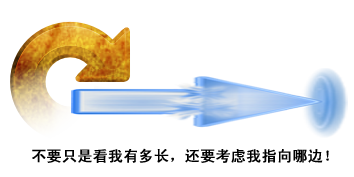 Vector
A vector, also known as a directed quantity, is defined as a quantity in a linear space that requires both magnitude and direction to be fully represented. For us, though, it's more convenient to stick with the simplest notion: a vector is a "directed line segment." The concept of a vector originated in physics, but its applications go far beyond physics. The emergence of vectors gave geometry and physics development yet another powerful tool. There's a saying: "The invention of logarithms extended the lifespan of astronomers." And I can say without exaggeration that the development of vectors has likewise been steadily extending the lifespans of mathematicians and physicists! more
Why do vectors have such tremendous power? Actually, when learning mathematics, we tend—consciously or not—to gravitate toward algebra, which is purely computational, while feeling a slight "resistance" toward geometry, which requires "drawing pictures." Over time, we become more willing to engage with algebra than with geometry. This is because we think of algebra as quantitative computation, while geometry demands abstract thinking and imaginative ability. Precisely because of this, vectors were endowed with vitality. We love computing, so we turn geometry into something computational; we don't just want to "compute algebra"—we want to "compute geometry" too!
How can geometry be turned into something "computable"? Analytic geometry was born for exactly this purpose. It places every geometric problem into a coordinate system and establishes equivalences between certain algebraic equalities (say, two lines having equal slopes) and certain geometric relations (say, two lines being parallel). In this way, once we prove the algebraic equality through computation, we have also proven the geometric relation.
Descartes
At the time, Descartes, standing at the methodological height of natural philosophy, believed that Greek geometry relied too heavily on figures, which shackled the imagination. As for the algebra popular in his day, he felt it was entirely subordinate to rules and formulas and could not become a science that improves the intellect. He therefore proposed that the strengths of geometry and algebra needed to be combined to establish a "true mathematics." The core of Descartes's thinking was: reduce geometric problems to algebraic form, and use algebraic methods of computation and proof to ultimately solve geometric problems. Guided by this idea, he founded what we now call "analytic geometry."
Even so, this coordinate-based approach has certain limitations (though its power is immense): it expresses only "quantity," not direction. That is, a single quantity requires two pieces of data to be determined. Yet most things in physics carry a "direction" as well (force, velocity, acceleration, for example)—and it's not only physics; even in mathematics, certain quantities become much simpler to handle once direction is taken into account. Vectors, built on a handful of defining operations (each of which has a corresponding physical meaning), let us reach astonishing results through analytical methods!
I often tell my fellow students: "Vectors are for people whose spatial reasoning isn't good. Since I'm not very sharp at it, I absolutely have to master vectors." This is said half in jest, but it does reflect a real fact: using vectors lets us reduce the amount of abstract geometric thinking required, thereby speeding up our research—and that's precisely why they extend our lifespans! So we might say: "An algebraist need not be skilled in geometry; but a geometer is certainly skilled in algebra—because they are skilled in vectors!"
The above are just a few of my impressions from when I first started learning about vectors. As for concrete examples of what vectors can do, that's beyond the scope of this article. In future posts, I'll write more examples of using vectors to solve problems in geometry, physics, and astronomy, so that everyone can experience the power of vectors more deeply.
Translated automatically with claude-sonnet-5; all equations are reproduced verbatim from the source. Copyright remains with the original author.