The Lie Symmetry Method for Solving Differential Equations (Part 1)
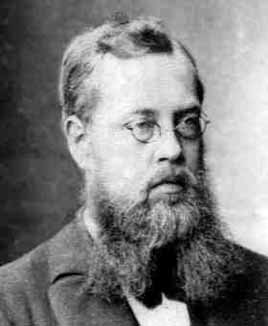 Marius Sophus Lie
Before this post, throughout the whole month of October Scientific Spaces had only put out one short reflection, over the National Day holiday — which is fairly rare. A minor reason is that this semester there's been a bit more activity in the club I'm part of (the campus radio station), though that's not the main reason. Really, most of my spare time this month went into two things: getting started with radio circuits, and the subject of this post, "The Lie Symmetry Method for Solving Differential Equations."
The Lie symmetry method solves differential equations mainly by discovering their symmetries. I first encountered this method in a book called Differential Equations and Problems in Mathematical Physics, which explained it very clearly and accessibly. Later I also bought a similar book, Symmetries and Integration Methods for Differential Equations, which is somewhat more abstract and goes into more depth. Among the Chinese-language books I've come across so far, these are the only two devoted specifically to solving differential equations via the Lie symmetry method. Another thing the two books have in common is that they are both translations of foreign textbooks. more
Although Differential Equations and Problems in Mathematical Physics now strikes me as fairly readable (though still not simple), when I first bought it I found it quite hard going, and I never really got the hang of it. It wasn't until this September, after studying the Feynman Lectures on Gravitation, that I noticed something familiar in the derivation of the field equations — an idea involving infinitesimal transformations — which reminded me of the approach in Differential Equations and Problems in Mathematical Physics. That prompted me to dig into it more deeply, and hence this post. Indeed, if a differential equation cannot be integrated outright, then we're left with qualitative or numerical methods; but if it does admit an integral, we should try our best to find it — and even if we can't integrate it completely, the partial result can still help simplify the problem.
This post, "The Lie Symmetry Method for Solving Differential Equations," is roughly organized as follows: I'll start with first-order ordinary differential equations as an example to sketch the basic idea of the Lie symmetry method; then generalize to systems of first-order ordinary differential equations; and after that move to a somewhat more abstract level, actually touching on some Lie algebra. If there's an opportunity, I might also discuss computational implementation. I honestly don't know how far I'll be able to take this, so for now I'll just publish the parts I've already written, while trying my best to write them well. If readers spot errors, or have other suggestions, please feel free to point them out.
Download:
The Lie Symmetry Method for Solving Differential Equations (Part 1).pdf
Introduction to the Lie Symmetry Method
Around 1870, Marius Sophus Lie realized that many methods for solving differential equations could be unified using group theory. Lie symmetry methods are at the core of modern research into nonlinear differential equations. They use the concept of symmetry to generate solutions in a systematic way. This post is a brief introduction to Lie's symmetry method.
Compared to other special integration tricks, the Lie symmetry method is remarkable. First, the idea of symmetry itself is fascinating; second, the Lie symmetry method is elegantly concise. For instance, without the Lie symmetry method, summarizing the existing integration techniques for second-order ordinary differential equations would require discussing more than 400 distinct forms — whereas the Lie symmetry method reduces this to just 4. In fact, the Lie symmetry method was originally developed precisely to organize the huge number of scattered techniques for integrating differential equations. Substantial evidence shows that group theory is the only general and effective method for finding analytic solutions to nonlinear differential equations. When other integration methods fail, group theory remains a universal tool for solving differential equations. The great advantage of the Lie group method is that, whenever a solution is possible, group analysis theory treats linear and nonlinear equations on an equal footing.
A key concept in Lie's method is that of an infinitesimal generator of a symmetry group. This concept runs throughout this post.
Table of Contents
I. First-Order Ordinary Differential Equations
1.1. Infinitesimal transformations
1.2. Canonical coordinates
1.3. First prolongation
1.4. Symmetries of the equation
1.5. Solving differential equations using symmetry
1.6. Equations with a given symmetry
1.7. Computing symmetries
1.8. First-order ordinary differential equations with known symmetry
1.9. Examples for this section
Translated automatically with claude-sonnet-5; all equations are reproduced verbatim from the source. Copyright remains with the original author.